Winter Intensive Practicum at EIIHS: A Model of Clinical and Academic Integration
As the Winter Intensive Practicum at the European Institute of Integrative Health Sciences (EIIHS) comes to a close, students complete one of the most demanding and defining phases of the academic year—one that integrates immersive clinical practice, community service, and rigorous academic evaluation.
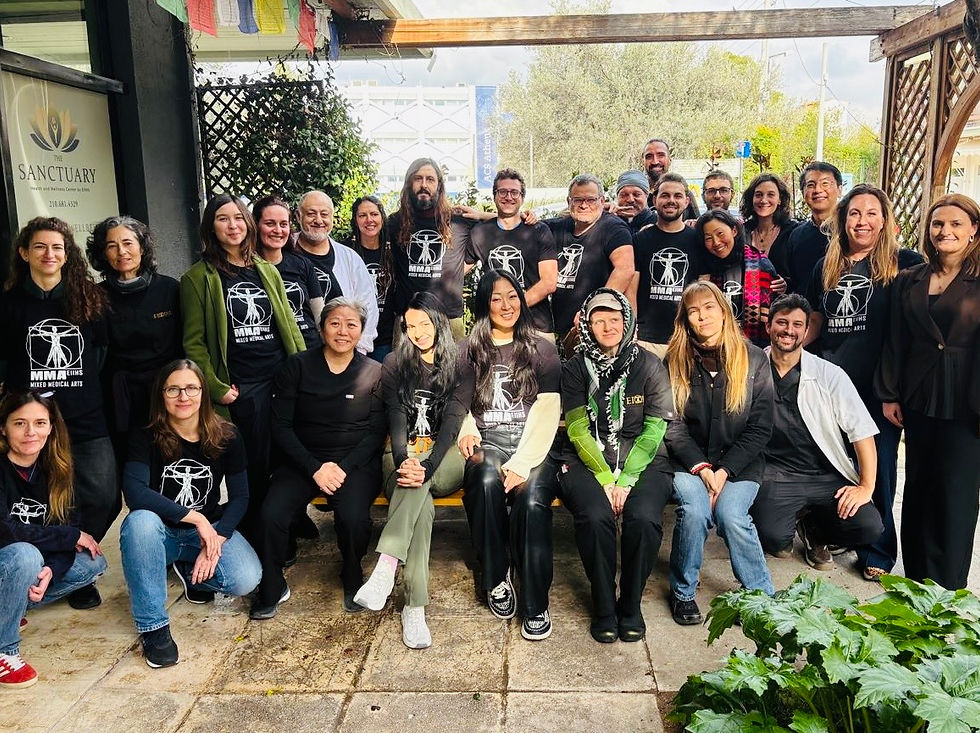
For prospective students and faculty alike, the Winter Intensive offers a clear view into how EIIHS trains practitioners: through depth, responsibility, and real-world clinical experience, supported by a carefully structured academic framework.
A Hybrid Program Built for Clinical Mastery
EIIHS is designed as a hybrid academic program. Theoretical coursework is delivered through pre-recorded didactic material, allowing students to engage deeply with foundational concepts at their own pace. Each week, students meet live with their professors in flipped classroom sessions, where theory is tested, discussed, and applied through clinical reasoning and case-based dialogue.
At the end of every semester, this learning moves fully into practice.
Students gather at The Sanctuary by EIIHS, in Athens, Greece, our community clinic, for a three-week intensive practicum held Monday through Saturday. Each day balances focused academic instruction with extended hours of supervised clinical work, ensuring that theory is not simply understood, but embodied.
A Community Clinic Serving Real Patients
During this Winter Intensive, the clinic was open to the public, welcoming local residents to receive Traditional Chinese Medicine treatments at no cost. In exchange, patients consented to receive care from students under close supervision, creating a learning environment grounded in real responsibility and service.
Over the course of three weeks, more than 200 patients were treated. Students primarily practiced acupuncture, supported by cupping, moxibustion, and nutritional consultation as clinically appropriate. The surrounding community was notably open and grateful for the opportunity to receive care, contributing to an atmosphere of trust and mutual respect.
This model allows students to work within a genuine clinical rhythm while providing meaningful service—an experience that cannot be replicated in simulated settings.
“Every intensive reminds us why this model matters. When students are trusted with real patients, under real supervision, something shifts. They gain not only skill, but the confidence that comes from doing the work—fully and responsibly.”— Allison Simpson, J.D., Chancellor & Co-Founder, EIIHS
A Layered Clinical Learning Environment
The Winter Intensive reflects the vertical structure of the EIIHS program. Fourth-year interns Paulina Kryszkiewicz, Kamil Qandil, and Eleftheria Spyridaki served as primary practitioners, carrying patient care from intake through treatment under direct faculty supervision. For Paulina, this marked her final intensive prior to graduation.
First- and second-year students assisted in clinic, observing and supporting the interns while actively participating in patient intake, pulse diagnosis, and tongue diagnosis. Although not yet primary practitioners, they are trained in gua sha and moxibustion and were able to apply these techniques when clinically appropriate. This early exposure allows younger students to develop diagnostic skill and clinical confidence well before they reach internship level.
Long Days and Meaningful Growth
The practicum days are long and physically demanding, and intentionally so.

First-year student Alexa Fisher, attending her first intensive, reflected that exhaustion brings gratitude and a new awareness of how much energy goes into what she described as “this incredible artwork.”
Returning students echoed similar sentiments. Siridya Khalsa shared that each intensive feels more hands-on, with increasing responsibility and opportunity to do more. Fourth-year intern Kamil Qandil described this intensive as particularly valuable due to the presence of visiting masters and doctoral students from Yo San University, which exposed him to clinical approaches beyond those taught at EIIHS and helped consolidate his skills through comparison and dialogue.
Clinical Theatre and Visiting Faculty
Throughout the Winter Intensive, students participated in weekly Clinical Theatre, where patient cases were reviewed in depth and treatment strategies were discussed collaboratively with faculty and peers. These sessions sharpen clinical reasoning and reinforce the habit of articulating one’s thinking clearly and responsibly.
The final day of in-person instruction featured a special live, hands-on lecture by expert Jonathan Chang on channel palpation, offering students advanced insight into diagnostic sensitivity and tactile assessment.
From Intensive Practice to Academic Evaluation
As the Winter Intensive concludes, students transition into the final academic phase of the semester. Following the live lecture, students participate in structured review sessions with their primary professors, preparing for final examinations covering the modules completed during the term.
Assessment at EIIHS is intentionally multi-dimensional. Students complete a written examination as well as an oral examination that is a defining feature of the school’s academic model. During the oral exam, students sit before a board of professors and are presented with a hypothetical clinical case that must be interpreted through the lens of the semester’s coursework.
This format reflects an institutional understanding that not all capable practitioners demonstrate mastery through written testing alone. Oral examinations allow faculty to evaluate how students think, how they reason clinically, and how they communicate under pressure. Students are assessed not only on substantive content, but also on presence, clarity, and professional demeanor—qualities essential to real clinical practice.
A Semester in Full
The Winter Intensive Practicum began on January 5, with students arriving in Athens for three weeks of immersive clinical and academic training. The semester concludes on January 31, with final examinations marking the completion of this phase of study.
Together, the practicum, community clinic, clinical theatre, visiting faculty, and rigorous academic evaluation reflect the full arc of the EIIHS educational model: theory, practice, reflection, and assessment—held to a high professional standard.
Book an Admissions Call
If you are considering enrolling as a student or exploring opportunities to teach within the EIIHS program, we invite you to speak with us directly.
Let’s explore whether this model is the right fit for you.


Comments